

In refinery, petrochemical, and power-generation piping systems, valve selection becomes more critical as temperature, pressure, and leakage requirements increase. A valve that works reliably in general isolation service may not be the right choice when the application demands repeated cycling, high-temperature operation, tight shutoff, and long service life. This article highlights differences between the most common isolation valves: triple offset butterfly valves vs gate valves.
Triple Offset Butterfly Valves vs Gate Valves: What Is the Difference?
The main difference comes down to how the valve moves and how it seals.
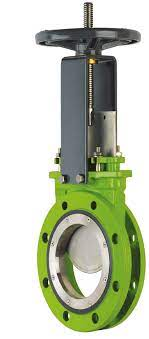
Gate Valve
A gate valve uses a wedge or gate that moves linearly between two seats. When fully open, the gate retracts from the flow path, giving the valve a nearly unobstructed bore and very low pressure drop. This makes gate valves a proven choice for full-open/full-closed isolation in refinery, petrochemical, and power applications.
Triple Offset Butterfly Valve
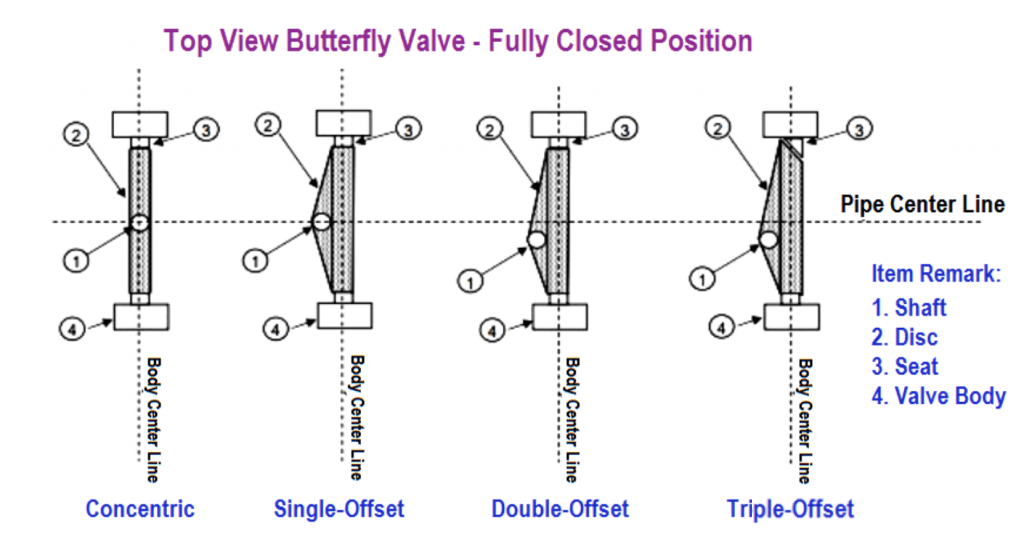
A triple offset butterfly valve takes a different approach. Its disc rotates 90 degrees, while the three-offset geometry keeps the disc and seat largely separated during the stroke. Near the closed position, the disc moves into the seat at an angle and establishes the seal.
Why the Triple Offset Design Matters
The third offset is what gives this butterfly valve its distinctive sealing action. The disc and seat use a conical sealing geometry. As the valve closes, the disc moves into the seat rather than dragging across it. Contact occurs primarily at the end of rotation, when the valve establishes shutoff.
For an engineer, the practical benefit is straightforward: the valve does not have to trade tight sealing for excessive rubbing every time it cycles.
That can improve seat life and help maintain consistent shutoff over repeated operation. Depending on the design and applicable test standard, triple offset valves can achieve extremely tight shutoff, including zero leakage to the specified test criteria.
The term “zero leakage” still needs to be put in context. In industrial valve specifications, it refers to performance against a defined test standard and acceptance criterion, not a guarantee of absolute zero leakage under every operating condition.
Torque and Actuation of Triple Offset Butterfly Valves vs Gate Valves
The operating mechanism creates another important difference between the two valve types.
- A gate valve uses multi-turn linear movement and must overcome factors such as packing friction, seating forces, and differential pressure. As valve size and pressure class increase, the stem, bonnet, actuator, and supporting hardware can become substantial.
- A triple offset butterfly valve uses quarter-turn operation. The disc rotates through 90 degrees, and the offset geometry keeps the sealing surfaces from continuously rubbing during most of that movement.
That can make the overall actuation package more compact, particularly on large-diameter piping.
It is important not to oversimplify this as “butterfly valves always require less torque.” They do not. Required torque depends on valve size, differential pressure, packing, seat design, breakaway torque, seating torque, and other operating conditions.
The engineering advantage is the quarter-turn operating arrangement and controlled sealing motion, not simply lower torque.
Shutoff Performance
Both valves can provide reliable shutoff when properly specified, manufactured, installed, and tested. The difference is how they maintain that shutoff during operation.
Gate valves have a long history of reliable isolation service and are particularly effective when the valve remains fully open or fully closed for extended periods. Their full-bore design is also valuable where minimizing pressure loss is a priority.
Triple offset butterfly valves become particularly attractive when tight shutoff is combined with frequent cycling or demanding temperature conditions. Their metal sealing system maintains the seal without the continuous sliding contact associated with many conventional valve designs.
This is a significant consideration for high-temperature applications. Metal seats can tolerate conditions that would exceed the practical limits of many resilient-seat designs.
High-Temperature Service
Temperature is often where valve selection becomes less straightforward.
A valve may have the required pressure rating but still be unsuitable because of seat, packing, body, or material limitations. The complete valve construction has to be evaluated against the actual operating temperature and media.
Triple offset butterfly valves are commonly used in high-temperature services because metal seating can be engineered for demanding conditions. Depending on the specific construction, they can be applied in refinery, petrochemical, power-generation, steam, and hot-gas systems.
Gate valves are also widely used in high-temperature service. API 600 covers heavy-duty steel gate valves for petroleum refinery and related applications, including designs intended for robust, full-port isolation.
So temperature alone should not decide the valve. Engineers should also consider pressure class, thermal cycling, media, operating frequency, emissions requirements, available space, and maintenance access.
Lifecycle Durability and Maintenance
The best valve is not necessarily the one that performs well when it is new. It is the one that continues to perform reliably after years of operation.
A triple offset butterfly valve can be advantageous in applications involving frequent cycling because its disc and seat are designed to minimize rubbing during operation. Lower sliding contact reduces the mechanism that normally drives seat wear.
Gate valves, meanwhile, are extremely durable when used for their intended purpose, particularly in applications where they remain fully open or fully closed for long periods. They are not generally intended for throttling. Operating a gate valve partially open can expose the seating surfaces to high-velocity flow and contribute to erosion or damage.
The selection ultimately comes down to the service.
If the valve is primarily an isolation device that rarely moves, a gate valve may be the straightforward choice. If the application requires tight shutoff, high temperature, frequent cycling, and limited installation space, a triple-offset butterfly valve deserves serious consideration.
Head-on: Triple Offset Butterfly Valves vs Gate Valves
| Consideration | Triple Offset Butterfly | Gate Valve |
| Operation | Quarter-turn | Multi-turn linear |
| Shutoff | Excellent with suitable metal-seat design | Excellent for isolation |
| High temperature | Excellent with appropriate materials | Excellent |
| Pressure drop when fully open | Low, but disc remains in flow path | Very low with full-bore design |
| Throttling | Possible for suitable designs/applications | Generally not recommended |
| Cycling | Well suited to frequent operation | Better suited to infrequent isolation |
| Installation footprint | Compact | Larger |
| Actuation | Quarter-turn actuator | Multi-turn actuator |
| Seat wear | Minimized by offset geometry | Seating surfaces can experience sliding |
| Typical strength | Tight shutoff, cycling, compact installation | Full-bore isolation and robust traditional design |
Frequently Asked Questions on Triple Offset Butterfly vs Gate Valves
Here are some frequently asked general questions about triple offset butterfly valves and gate valves.
“Zero leakage” should always be tied to a defined test standard and acceptance criterion. Engineers should confirm the applicable standard, test pressure, test medium, flow direction, and allowable leakage rate rather than assuming the term means absolutely no leakage under every operating condition.
Not necessarily. Even when both valves can perform the same isolation function, engineers should verify face-to-face dimensions, end connections, pressure class, flow direction, actuator clearance, piping loads, and operating conditions before replacing one with the other.
Some designs can seal in both directions, while others may have a preferred or rated direction of differential pressure. Flow direction and shutoff requirements should therefore be verified with the specific valve manufacturer rather than assumed from the valve type alone.
Important application data includes operating and design pressure, operating and design temperature, process media, differential pressure, required leakage performance, cycling frequency, flow direction, available installation space, actuation requirements, and maintenance expectations. Evaluating these conditions together helps determine which valve design best suits the application.
The Bottom Line
Triple offset butterfly valves and gate valves are both capable isolation technologies, but they solve different engineering problems. QRC Valves supports industrial customers with engineered valve solutions from leading manufacturers, including triple offset butterfly and gate valve technologies, backed by technical support and product availability.
Contact us today for a free quotation.
Recent Comments